
Barefoot Doctor's Journal
Take control of your health with this guide to natural health and healing. Get expert advice to help you alleviate pain and live healthy naturally. Access to tools, information and opportunities.
Take control of your health
For 5000 years Traditional Chinese Medicine has help people to relieve pain and achieve a healthy longevity naturally.
A comprehensive guide to natural health and healing, the Barefoot Doctor’s Journal seeks to empower it's readers to take control of their own health, find their own inspiration, help create healthier communities and share the adventure with whoever is interested. Internationally recognized experts in the fields of healthy aging and Traditional Chinese Medicine, the Living Younger Longer Institute has helped hundreds of people each year to live healthy naturally.
News You Can Use!
Providing members with the latest scientific research on the ancient healing secrets of Traditional Chinese Medicine. Get information, access to tools, and enjoyable opportunities for a lifetime of active adventure!
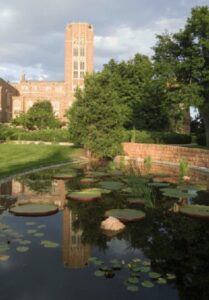
Never Stop Learning
“Anyone who stops learning is old, whether, at twenty or eighty, anyone who keeps learning is young.” Henry Ford
Lifelong Learning opportunities at the University of Denver’s OLLI Spring term, and Summer opportunities at Oxford University.
Choose from hundreds of courses from two of the top Universities in the world. Take classes for your own interest, follow your own inspiration and learn something new.
OLLI AT DU WELCOMES YOU TO THE OLLI ONLINE 2021 SPRING TERM
The University of Denver has nearly one-hundred and fifty (150) courses to choose from this spring term including several courses by our own Joe Brady and Jacqui Shumway see below.
Registration begins Monday, February 22, 2021Classes start the week of March 29, 2021Catalog will be posted on February 21st by 10:00 a.m
The Osher Lifelong Learning Institute (OLLI) at the University of Denver is a membership program designed for men and women age 50 and over, who wish to pursue lifelong learning in a relaxed non-competitive atmosphere. There are no tests, no grades, no academic requirements – just a desire for learning and a penchant to be curious.
To view to full catalog and to register see https://portfolio.du.edu/ollionline/page/109957
Summer School at Oxford Online and Short Courses

Study whenever it suits you, from anywhere in the world.
Our short online courses take place in a virtual learning environment. Most courses are 10 weeks in duration and they all run asynchronously – they have no live-time meetings – so you do not have to be online at any specific time to take the course. You can access the course whenever it is convenient for you, from anywhere in the world.
Class sizes are kept small to maximize interaction between you and your classmates and tutor in the online forums. Students are able to take part in in-depth discussions and receive personalized tutor guidance and feedback.
> View all short online courses
Sample units from online courses are available to view from the course demonstration site.
(more…)
Lifelong Learning Improves Mental Function
According to the World Health Organization, active aging is defined as “the process of optimizing opportunities for health, participation, and security in order to enhance the quality of life as people age.” People can stay active throughout their lifespans by participating in social, cultural, economic, spiritual, and civic affairs. That can include paid and volunteer work as well as regular physical exercise. From the WHO perspective, “health” includes physical, mental, and social well-being and encourages older adults to stay as active as possible to extend healthy life expectancy.
European countries launched University of the Third Age (U3A) courses for older adults in 1973 in France. These programs have spread across much of the world and the sight of older adults attending classes along with their younger classmates is becoming a familiar sight on many campuses. Courses for older adults can range from current events, tai chi, yoga, art, music, literature, humanities, social sciences, and even to more rigorous science and technology subjects.
Although the life-long learning trend is likely to continue as baby boomers age, actual research showing the benefits of continuing education in older adults is still limited.
Gerontology research has shown that lifelong learning programs can help reduce cognitive decline due to aging as well as helping older adults deal with depression and poor self-image although controlled studies of lifelong learning remain scarce.
(more…)
How to get a vaccine, and what to do then
The good news is we are entering the “light at the end of a long dark tunnel” phase of the COVID -19 Pandemic. The bad news is it’s more than just a little confusing just how to go about getting your vaccine. In general, you need to contact your health care provider and see what procedures they specifically have set up. They can tell you when where and whatever rules they have. Below are listed specific instructions for SCL health and Kaiser. Both have contingencies for folks who are not SCL or Kaiser patients so don’t be shy about getting on the lists. At the bottom of this email is a complete list of sites that are offering vaccines.
The most important thing people need to do right now is to be patient. Everybody knew the rollout of the vaccine was going to be rough so everybody needs to rollback and relax. They will get to everybody as fast as is humanly and bureaucratically possible. Remember after you get the vaccine you are still going to have to be careful, wear a mask, socially distance and limit exposure for a while until we get the all-clear from public health officials. With new variants coming along we may have to use precautions for quite some time. Having said that, it will at least be somewhat of stress relief when you do get your shot so definitely sign up as soon as possible but be patient as you wait your turn.
Listed below you will find instructions for getting on a list and also for what to do after you get the shot if you do experience side effects.
(more…)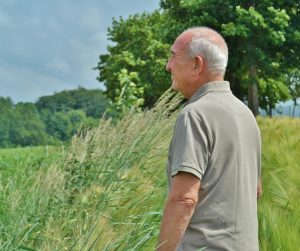
Healthy Aging and Integrative Medicine
Grand Rounds Osher Institute for Integrative medicine, Harvard Medical School/ Brigham and Women’s Hospital
Date: Tuesday, February 2nd at 8:00-9:00 am on Zoom
Register Here
Stress impacts aging in multiple ways; stress management over the lifespan is increasingly recognized as a strategy to promote healthy aging of the body and mind. Integrative medicine practices like yoga, tai chi, massage, acupuncture even art classes, and visits to the Botanic Gardens all have great potential to relieve stress and influence the effects of stress on the aging process.
In this month’s Grand Rounds, we will hear from a patient and his neuropsychologist about the impact of stress on aging with a special focus on cognition. Joined by Dr. Amy Peters and Dr. Zeina Chemali, and Dr. Steven J. Atlas, Dr. Loewenthal will share clinical approaches and research evidence regarding healthy aging.
- Join virtually by live stream here.
- If you want to request CME credit for virtual participation, to be eligible, send an email between 8:00-8:30am on February 2nd with your full name, degree and organization to jcantlin@bwh.harvard.edu.
- Submit your questions via the Q&A function in Zoom.
Presenters: Julia Loewenthal, MD, Brigham and Women’s Hospital; Amy Peters, PhD, Massachusetts General Hospital; and Zeina Chemali, MD, MPH, Massachusetts General Hospital; Steven J. Atlas, MD, MPH, Massachusetts General Hospital
(more…)
Life-long Learning is Medicine
The Superior Doctor is a Teacher
Ancient Chinese Proverb
“Preventive Medicine is Education”
Former Surgeon General C. Everett Koop M.D.
Life-long learning programs in the community have a great potential to improve the health and well-being of older adults and is likely to be a growing trend as baby boomers reach retirement age. However actual research showing the benefits of community education programs in older adults is still limited. Some research has shown that continuing education can help reduce cognitive decline due to aging as well as helping older adults deal with depression and poor self-image although controlled studies lifelong learning programs remain scarce.
A few studies have shown a clear association between continuous participation in lifelong learning courses and the psychological wellbeing of older adults, The results show that Continuous and ongoing participation in lifelong learning programs contribute to the conservation of psychological wellbeing over time. Yet research into the benefits of life-long learning on global health issues such as physical function, pain, depression, anxiety, and measures of social skills are far few and in between.
See https://www.ncbi.nlm.nih.gov/pmc/articles/PMC5848758/
The Evidence for Life-long Learning at Oxford
Health and well-being can be influenced by a variety of factors. Members of the Centre for Evidence Based Medicine are working with colleagues from the Gardens, Libraries and Museums (GLAM) team at the University of Oxford and Kellogg College to explore ways in which cultural settings and learning opportunities in community settings can contribute to people’s health and well-being. Their findings form a framework under which the health benefits of lifelong learning can be understood.
(more…)